
About the project
Context
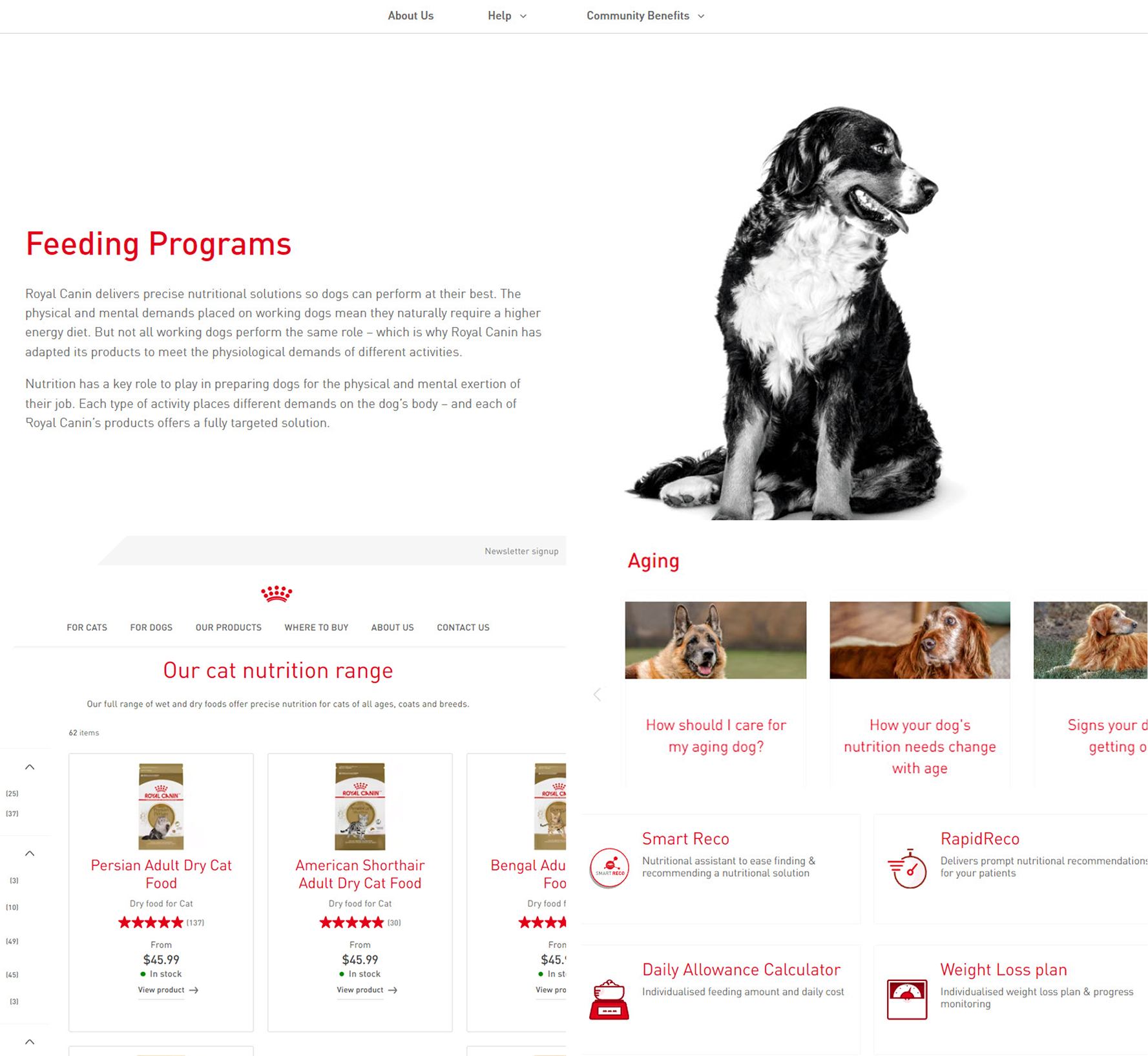
Since December 2023 I have been Lead PXM and PIM for two brands of a global petcare group, working inside its Digital Factory with the product teams and three parallel programs. The scope is wide: 8,000+ product models, 90,000+ assets, 6 regulatory zones from North America to Korea and Japan, and 6+ platform types, from the brand sites and D2C shops to B2B webshops, vet services and product finders.
The same bag of food is not the same product for everyone. A pet owner wants to know if their dog will like it, a veterinarian wants the clinical claim, a distributor wants the barcode and the pallet. One catalog has to tell all three truths, in every market.
The Challenge
The challenge
Product data travels a long road here: PLM, then the DAM, then Akeneo, then the internal APIs, then syndication to e-commerce, apps, customer service and retailers. Every handover is a place where data can drift, and 7+ business units, from packaging and graphic chain to R&D, innovation, supply and master data, each own a piece of the road.
Two problems stood out. A reconciliation showed that 67% of products shared a duplicated barcode, a side effect of product versioning and low GS1 maturity. And in a content workshop, the six pain points the teams raised were all about governance, ownership and source of truth, not about missing features.
HOW WE FIX ISSUES
What we did
Govern the PIM, starting with owners
I defined the Akeneo data models, enrichment workflows, quality rules and completeness levels, and coordinate daily with the integration teams and the business units feeding the pipeline. Most "tool problems" turned out to be ownership problems, so we settled who owns what before asking for new features. For the US teams I also configured Salsify, from readiness reports and validation rules to workflows and roles, for syndication to retailers.
Treat identifiers as a contract
Fixing the duplicated barcodes meant warning distributors for about 4,000 references. An identifier is a promise to the outside world, and the cheapest moment to get it right is the first one.
Make products findable
For the D2C sites in Europe, I reworked catalog categories and attributes and their mapping to the search index: facets, filters, synonyms and merchandising rules.
Stretch the model with new product types
We launched the first non-food products in the catalog, and new product types such as supplements and fresh food. New product types are the real test of whether a model scales.
Result
- Searches returning zero results dropped from about 8% to about 2% in a year (figure reported by the client team).
- A barcode clean-up plan covering about 4,000 references with distributors.
- One governed pipeline from PLM to syndication, with a clear owner at each stage.
Bad product data is a customer problem before it is an IT problem. If you run a multi-market catalog, why PIM projects fail goes deeper into the governance side.
The Toolbox
Technology Stack
 Akeneo
 Mulesoft
 Salsify
 Productsup
 Commercetools
 Magento
 Azure Devops
 Power BI