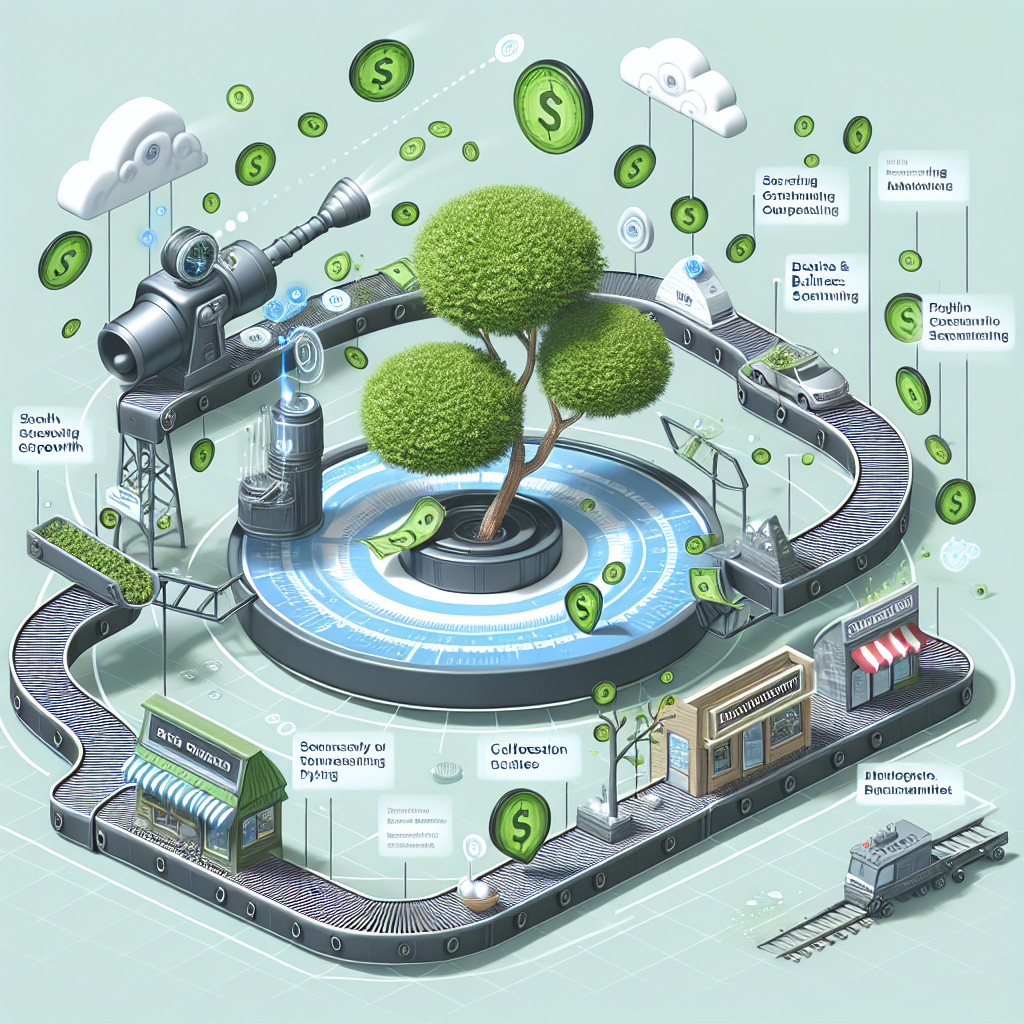
Marketing Automation for Small Business: Tools and Tactics That Drive Growth
Article Overview
Article Type: How-To Guide
Primary Goal: Enable CEOs, CTOs, founders, heads of marketing, product owners, and agency leads to select the right marketing automation tools, design high-impact automation workflows, integrate them into existing stacks, and measure ROI with a practical implementation roadmap tailored to small business constraints.
Who is the reader: CEOs, CTOs, founders, agency owners, program managers, product owners, heads of marketing, and heads of product working at small and early-stage B2B and B2C brands, typically evaluating or planning adoption of marketing automation to accelerate growth and improve efficiency.
What they know: Readers understand basic digital marketing channels and have some exposure to CRMs and email marketing. They might have used Mailchimp or Shopify and are familiar with lead capture and newsletters, but they lack a systematic automation strategy, an integration plan, and a clear ROI model.
What are their challenges: Limited budget and engineering resources, fragmented customer data across platforms, low in-house automation expertise, pressure to show near-term revenue impact, uncertainty about tool selection for B2B versus B2C, and the need to comply with privacy regulations while scaling personalization.
Why the brand is credible on the topic: Doctor Project is an Expert Council for Emergent Technologies with practical consulting experience across AI, e-commerce, product management, strategy, and branding. The team has executed marketing automation projects for small and midmarket clients, integrated CRM and commerce platforms, and advised on data architecture and measurement frameworks for growth initiatives.
Tone of voice: Analytical and insightful with a professional, evidence based approach. The voice balances industry terminology and clear explanations, prioritizes logical flow, and presents tradeoffs and practical recommendations rather than vendor hype.
Sources:
- HubSpot State of Marketing 2023 marketing automation and email benchmarks
- Forrester Research reports on marketing automation ROI and lead nurturing
- Klaviyo Benchmarks for ecommerce email performance
- Zapier small business automation guides and operational case studies
- Google Analytics 4 migration resources and data collection guidance
Key findings:
- Marketing automation consistently improves lead conversion rates and accelerates time to first purchase when workflows are aligned with the customer journey, according to HubSpot benchmarks.
- Forrester finds that structured lead nurturing programs paired with lead scoring increase marketing sourced revenue by measurable percentages within 6 to 12 months.
- Ecommerce brands using behavioral email platforms such as Klaviyo see higher repeat purchase rates and average order value when flows target cart abandonment, browse abandonment, and post purchase sequences.
- Small businesses realize outsized operational efficiency from low code automation platforms such as Zapier and Make for integrating CRM, e-commerce, and ad platforms without heavy engineering investment.
- Accurate measurement and data hygiene are common failure points; migrating to Google Analytics 4 and centralizing identity with a lightweight CDP reduces attribution leakage and improves ROI calculations.
Key points:
- Provide a practical tool selection framework mapped to common small business scenarios (B2B SaaS, DTC ecommerce, agency-led clients) with concrete tool recommendations.
- Show step by step tactics and prebuilt automation templates that deliver measurable impact: welcome series, lead nurture, cart recovery, onboarding, and reactivation.
- Explain integration and data architecture requirements: single customer view, canonical CRM, CDP or event pipeline, and practical low code integration patterns.
- Give an implementation roadmap with phased milestones, roles, estimated timelines, and budget ranges to set realistic expectations.
- Describe measurement and attribution methods with specific KPIs, formulas, and dashboard examples for tracking ROI.
Anything to avoid:
- Generic vendor lists without matching tools to business scenarios and constraints.
- Overpromising that automation alone will produce growth without strategy, segmentation, and quality content.
- Heavy technical jargon without actionable implementation steps for non engineering stakeholders.
- Ignoring privacy and consent requirements such as GDPR and CCPA when recommending tracking and messaging tactics.
- Presenting automation as a one size fits all solution rather than showing tradeoffs between simplicity and advanced personalization.
External links:
- https://www.hubspot.com/state-of-marketing
- https://www.klaviyo.com/resources
- https://zapier.com/learn/automation/small-business-automation/
- https://www.forrester.com/research
- https://support.google.com/analytics/answer/10089681
Internal links:
Content Brief
This article explains how small businesses can adopt marketing automation to drive measurable growth while minimizing engineering overhead and budget waste. Cover the strategic prerequisites, a decision framework for tools, concrete automation tactics with examples and templates, integration and data hygiene requirements, measurement and attribution, and an actionable implementation roadmap. Write in an analytical, evidence based style that balances technical accuracy and practical clarity. Use vendor names and real product examples when recommending tools. Avoid vendor sales language and prioritize tradeoffs. Include short practical checklists and metric formulas. Aim the level of detail at senior practitioners who will brief teams or agencies and need to make procurement and implementation decisions.
Why marketing automation matters for small business and where it moves the needle
- Concrete business outcomes: faster lead qualification, higher conversion rates, improved repeat purchase rate, and reduced manual workload with supporting benchmark citations from HubSpot and Klaviyo.
- Common low effort, high impact use cases for small businesses: welcome series, cart recovery, onboarding, lead nurture, and reactivation.
- How automation scales team capacity: examples of tasks that automation replaces such as manual email sends, rule based segmentation, and repetitive announcements.
Mapping the customer journey to prioritize automation opportunities
- Step by step approach: inventory channels, identify conversion moments, map touchpoints, and score opportunity by impact and ease of implementation.
- Tools and artifacts to create: Miro or Lucidchart journey maps, customer lifecycle stage definitions, and funnel leakage heatmaps from Google Analytics.
- Quick audit checklist to find low hanging fruit: top exit pages, highest friction onboarding steps, and cart abandonment rates on Shopify or Stripe checkout.
Tool selection framework for small business: match needs to capabilities
- Evaluation criteria: core features, behavioral triggers, CRM integration, segmentation, deliverability, pricing, developer resources, and vendor support.
- Tool shortlist for common scenarios: HubSpot CRM and Marketing Hub for B2B growth and integrated CRM; ActiveCampaign for cost effective email automation and CRM; Klaviyo for Shopify native ecommerce behavioral flows; Mailchimp for simple newsletters and basic automation; Customer.io and Iterable for behavior driven messaging at scale.
- Integration and orchestration tools: Zapier and Make for no code integrations, Segment and Hightouch for identity and event streaming, Twilio and Attentive for SMS.
- How to choose between all in one platforms and best of breed stacks depending on growth stage and engineering availability.
Core automation tactics that drive growth, with concrete templates
- Welcome and onboarding sequence for lead capture: triggers, cadence, example subject lines and KPI targets using HubSpot or ActiveCampaign.
- B2B lead nurture with lead scoring and sales handoff: behavioral scoring rules, scoring thresholds, and recommended SLA between marketing and sales using HubSpot or Salesforce.
- Ecommerce flows: abandoned cart recovery, browse abandonment, post purchase cross sell, and winback using Klaviyo plus Shopify; include recommended timing and sample success metrics.
- Triggered SMS and push notifications: where to add SMS using Twilio or Attentive, consent requirements, and use cases for time sensitive messages.
- Retention and lifecycle campaigns: VIP segmentation, churn prediction triggers, and A/B testing recommendations.
Integration, data hygiene, and identity: building a reliable single customer view
- Define authoritative systems of record: CRM for contacts, ecommerce platform for transactions, analytics for event capture.
- Implement a simple event pipeline: Segment or direct webhooks into backend, canonical identifiers, and reconciliation patterns.
- Data quality checklist: deduplication, standardized event schema, email verification, subscription status, and retention policies.
- Privacy and compliance: GDPR, CCPA basics, consent capture best practices, and storing suppression lists securely.
Measuring success: KPIs, attribution, and dashboards that prove ROI
- Primary KPIs for small business automation: conversion rate lift per flow, recovered revenue from cart recovery, MQL to SQL velocity, customer acquisition cost, and customer lifetime value.
- Formulas and quick calculations: conversion lift percentage, recovered revenue = recovered orders times average order value, CAC payback period examples.
- Attribution approaches: last non direct, multi touch, and pragmatic rules for small teams; using GA4, HubSpot reports, and Klaviyo dashboards to triangulate numbers.
- Dashboard recommendations: Looker Studio templates, HubSpot custom reports, and Klaviyo performance reports to monitor flow health.
Implementation roadmap and resourcing: from audit to scale
- Phased plan: 1. Discovery and audit (2 weeks), 2. Quick wins build and launch (4 to 8 weeks), 3. Integration and consolidation (2 to 4 months), 4. Optimization and scaling (ongoing).
- Roles and resourcing: required skills from marketing operations, product or engineering, content writer, and analytics; when to hire vs contract an agency.
- Budget guidance: expected ranges for subscription tiers, integration costs, and initial setup consulting for small business compared across HubSpot, Klaviyo, and ActiveCampaign.
- Governance and playbook: naming conventions, folder structure, version control for flows, and periodic health checks.
Practical playbooks and next steps: five ready to use automation templates
- Welcome series for new signups: trigger, three stage cadence, content goals, and KPIs to track using ActiveCampaign or HubSpot.
- Abandoned cart email plus SMS recovery flow for Shopify stores using Klaviyo and Twilio: timing, messages, and expected benchmarks.
- B2B lead qualification and handoff playbook: lead scoring model, nurture sequence, and sales SLA example using HubSpot or Salesforce.
- Post purchase cross sell and review request sequence for DTC brands: triggers, segmentation rules, and conversion targets.
- Onboarding sequence for SaaS: milestone based emails, in app tooltips, and escalation triggers for dropouts.
Frequently Asked Questions
What is a realistic budget for marketing automation for a small business?
Budget varies by needs but expect subscription costs from zero for basic tiers to 800 to 2,000 USD per month for mid tier HubSpot or Klaviyo plans, plus initial setup and integration costs of 3,000 to 15,000 USD depending on complexity.
How long before marketing automation shows measurable results?
Quick win flows such as abandoned cart and welcome series can produce measurable lift in 2 to 8 weeks; full lead nurture and attribution clarity typically require 3 to 6 months to evaluate.
Which tool is better for ecommerce, Klaviyo or Mailchimp?
Klaviyo is optimized for ecommerce behavioral flows and deeper Shopify integration while Mailchimp is suitable for simpler newsletters and basic automation; choose Klaviyo when personalization and revenue per message matter.
Can small teams implement automation without engineers?
Yes; no code automation with Zapier, Make, and native integrations in HubSpot and Klaviyo lets small teams deliver many workflows, but engineers help with robust identity stitching and custom events.
How do I measure the ROI of an automation flow?
Measure incremental conversions and revenue attributable to the flow over a baseline period, calculate recovered or incremental revenue, and compare to setup and recurring costs to compute payback period.
What privacy requirements are critical when building automation?
Collect explicit consent for marketing communications where required, store suppression lists centrally, implement cookie consent mechanisms for tracking, and document data retention policies to comply with GDPR and CCPA.