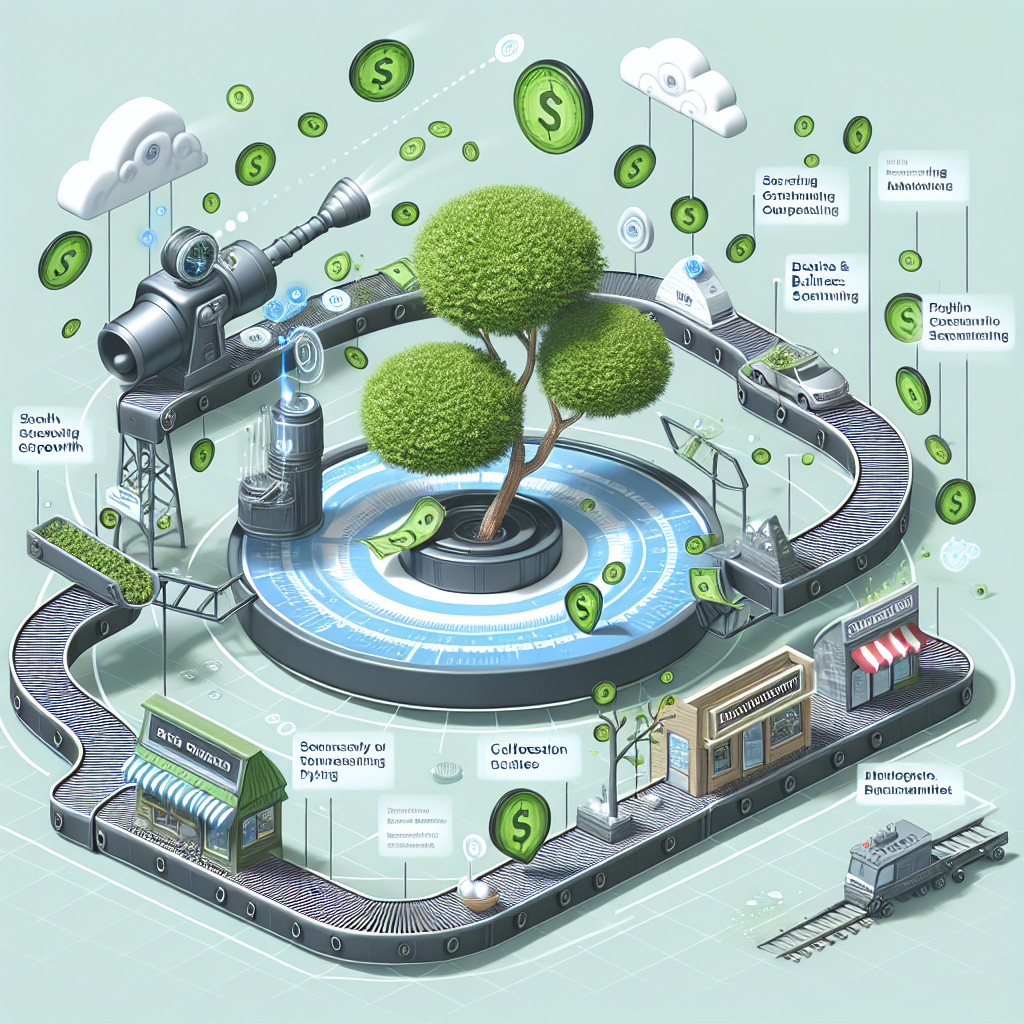
Ecommerce Email Marketing Strategy: Converting Customers at Every Stage
Article Overview
Article Type: How-To Guide
Primary Goal: Provide senior ecommerce and product leaders with a tactical, evidence-based blueprint to design, implement, and measure an end-to-end email marketing strategy that converts customers at acquisition, conversion, and retention stages.
Who is the reader: CEOs, CTOs, Founders, Agency leaders, B2B Program Managers, Product Owners, Head of Marketing, Head of Product, and decision makers at B2C brands operating ecommerce businesses who are responsible for growth, revenue, and product-led marketing decisions. Readers are evaluating strategic investments in email automation, personalization, and data infrastructure.
What they know: Readers understand basic email marketing concepts and common tools such as Mailchimp and Klaviyo. They know about segmentation, automation, and the need for conversion optimization but want concrete lifecycle maps, measurable templates, integration requirements, vendor tradeoffs, and evidence-backed tactics to scale revenue.
What are their challenges: Challenges include stagnant conversion rates from email, inconsistent lifecycle orchestration, fragmented customer data across platforms, deliverability and inbox placement issues, balancing personalization with privacy rules, and choosing the right tech stack and KPIs for enterprise scale.
Why the brand is credible on the topic: Doctor Project is an Expert Council for Emergent Technologies with domain expertise across AI, ecommerce, product management, strategy, and branding. The practice advises enterprise and growth-stage ecommerce brands on revenue optimization, has designed automated lifecycle campaigns encompassing personalization and ML-driven recommendations, and consults on data architecture and compliance required to run scalable email programs.
Tone of voice: Analytical, professional, and evidence-driven with structured logic and actionable recommendations. The voice balances technical precision useful for product and engineering leaders with strategic clarity for executives, using data to support tradeoffs and poses scenarios to prompt strategic decisions.
Sources:
- Klaviyo Benchmarks https://www.klaviyo.com/benchmarks for lifecycle performance and channel benchmarks
- Litmus State of Email https://www.litmus.com/resources/state-of-email/ for trends in deliverability, client rendering, and mobile opens
- HubSpot Email Marketing Benchmarks https://www.hubspot.com/email-marketing-benchmarks for industry open rates and click rates
- Shopify Email Marketing Guide https://www.shopify.com/blog/email-marketing for ecommerce-focused content and use cases
- Validity/Return Path deliverability resources https://www.validity.com/resources/white-papers/email-deliverability/ for inbox placement and authentication best practices
Key findings:
- Welcome series and first-party data capture drive the highest revenue per recipient compared with broadcast campaigns, as shown in Klaviyo benchmarks
- Segmentation and personalized product recommendations materially increase click-through and conversion rates; marketers with advanced personalization outperform peers in retention metrics
- Deliverability fundamentals including SPF, DKIM, DMARC, and list hygiene directly impact campaign ROI because inbox placement correlates to measurable revenue shifts
- Lifecycle attribution requires combining email analytics with ecommerce analytics to avoid over-claiming revenue; multi-touch attribution and cohort analysis produce more reliable ROI estimates
Key points:
- Map the ecommerce customer lifecycle into explicit email objectives and measurable KPIs for each stage: acquisition, activation, conversion, retention, and reactivation
- Provide concrete, reusable campaign flows and templates for welcome series, browse abandonment, cart abandonment, post-purchase journeys, replenishment, and VIP reactivation with metrics to track
- Detail the required tech stack and integrations, including examples of platforms, schemas, and APIs for personalization and revenue attribution
- Explain deliverability, compliance, and data governance fundamentals that must be operationalized before scaling personalized automations
- Show how AI and automation can be applied practically: subject line optimization, product recommendation engines, send time optimization, and predictive churn scoring
Anything to avoid:
- High level platitudes without templates, sample flows, or measurable KPIs
- Overly promotional tone about Doctor Project without actionable insights or third-party evidence
- Generic tool recommendations without tradeoffs for mid-market versus enterprise contexts
- Ignoring privacy and compliance constraints when recommending personalization or data capture tactics
- Presenting one-size-fits-all frequency recommendations without segmentation or testing guidance
External links:
- https://www.klaviyo.com/benchmarks
- https://www.litmus.com/resources/state-of-email/
- https://www.hubspot.com/email-marketing-benchmarks
- https://www.shopify.com/blog/email-marketing
- https://www.validity.com/resources/white-papers/email-deliverability/
Internal links:
Content Brief
Context and writing guidance for the article. Explain that the article maps a complete ecommerce email marketing playbook tied to measurable business outcomes. Emphasize practical deliverables: lifecycle maps, sample email sequences, KPI definitions, vendor and integration guidance, deliverability and compliance checklist, and pragmatic AI use cases. Adopt an evidence-based approach citing benchmarks and studies. Keep tone analytical and executive-friendly while providing tactical instructions for product and marketing teams. Prioritize clarity on who executes each recommendation: marketing, product, data engineering, or external agency. Use real tool names and include short code or JSON examples for event schemas where relevant. Do not include generic marketing fluff; every recommendation must connect to a metric and an implementation step.
1. Define lifecycle objectives and success metrics for each stage
- Map stages: Acquisition, Activation, Consideration, Conversion, Post-purchase, Retention, Reactivation. Show how each stage links to a primary metric (e.g., CAC, conversion rate, repeat purchase rate, CLTV growth).
- Provide a sample metric table mapping objective, KPI, event to track, and reporting cadence. Example: Post-purchase stage primary KPI = 30-day repeat purchase rate; events = order_completed, product_view, email_click; cadence = weekly cohort.
- Instruction for AI content generation: produce a 3-row sample metric table and a 6-step lifecycle map diagram with owner role for each stage (marketing, product, data engineering).
2. Acquisition and welcome sequence that converts high-intent subscribers
- Design elements: source-based segmentation for signup origin (paid ads, organic, referral), lead capture UI best practices, progressive profiling for first-party data capture.
- Construct a 3-email welcome series template: email 1 welcome and offer, email 2 social proof and product benefits, email 3 user education plus product recommendations. Include recommended timing, subject line themes, and performance benchmarks to expect.
- Show a sample event schema for signup with utm, channel, and first_touch attributes. Instruction for AI content generation: output subject line variations A/B test ideas and sample copy for the three welcome emails aimed at mid-market consumer electronics brand.
3. Engagement and consideration flows using behavioral segmentation
- Segmentation framework by intent signals: browse behavior, product category interest, past purchases, and engagement recency. Provide examples of segments and expected revenue impact.
- Tactical flows: browse abandonment, browse-to-cart nudges, category-specific content sequences, and educational sequences for high-value products. Include recommended frequency and escalation path.
- Implementation note: show how to implement events like product_view, add_to_cart, and wishlist_add across web, mobile, and server-side tracking for accurate segmentation. Instruction for AI: produce a 5-step checklist for event instrumentation and a sample rule for creating a browse abandonment segment in Klaviyo or Iterable.
4. Conversion accelerators: cart abandonment, dynamic recommendations, and urgency mechanics
- Cart abandonment flow blueprint: timing (1 hour, 24 hours, 72 hours), content hierarchy, incentives strategy, and subject line tests. Include example sequences for high AOV and low AOV products.
- Dynamic product recommendations: compare using built-in recommender from Klaviyo, Nosto, and custom ML model. Provide when to choose each based on data volume and engineering capacity.
- Urgency and scarcity tactics with measurement guardrails to avoid brand fatigue. Instruction for AI generation: provide two complete cart abandonment email templates (high AOV and low AOV) with subject lines, preheader text, and product block copy.
5. Post-purchase and retention: maximizing repeat rate and CLTV
- Post-purchase journey: order confirmation, shipping updates, product usage tips, cross-sell and replenishment timing. Include recommended cadence and triggers tied to product category.
- Loyalty and VIP flows: criteria for VIP segmentation (RFM thresholds), gated VIP benefits, and a VIP reconversion playbook. Provide example incentives that preserve margin.
- Measurement: explain cohort analysis to measure lift in repeat purchase rate, average order value, and customer lifetime value. Instruction for AI: generate a 6-email post-purchase sequence for a subscription and non-subscription product respectively.
6. Measurement, attribution, and experimentation framework
- Define primary and secondary KPIs: attributed revenue, CVR, email-driven AOV, unsubscribe rate, deliverability metrics, and inbox placement rate. Explain differences between last-click attribution and multi-touch attribution.
- Experimentation plan: how to run subject line, creative, timing, and incentive tests using holdout groups. Provide sample statistical thresholds and recommended minimum sample sizes for ecommerce lists.
- Reporting architecture: combine email platform metrics with ecommerce analytics (Shopify, Magento, Snowflake, GA4) and show a sample SQL query to compute weekly email attributed revenue by campaign. Instruction for AI: produce a 5-step template for an A/B experiment and a sample metric dashboard layout.
7. Technology, integrations, deliverability, and data governance
- Tech stack decision matrix: compare Klaviyo, Braze, Iterable, Omnisend, and Mailchimp across scale, personalization, engineering lift, and pricing. Provide example use cases for each platform.
- Deliverability checklist: authentication (SPF, DKIM, DMARC), dedicated IP versus shared IP tradeoffs, list hygiene, engagement-based sending, and monitoring tools such as 250ok or InboxAtlas.
- Privacy and data governance: first-party data strategy, consent capture flows, suppression lists, and GDPR/CCPA operational steps. Instruction for AI: create an integration map showing data flows between ecommerce platform, CDP (such as Segment), email platform, and analytics warehouse.
8. Practical roadmap and resourcing plan to scale email as a revenue engine
- 90-day tactical roadmap with deliverables: instrumentation, core flows, first test plan, and reporting baseline. Assign owners and expected business impact per milestone.
- Resourcing matrix: recommended roles and FTE allocation for small, mid-market, and enterprise teams including marketing operations, copywriter, data engineer, and ML engineer.
- Risk mitigation: staging and QA checklist for email sends, rollback procedures, and anomaly detection for revenue drops or deliverability issues. Instruction for AI: output a 90-day Gantt-style roadmap and a one-page RACI for implementation.
Frequently Asked Questions
Which KPIs should I prioritize when measuring email marketing performance for ecommerce?
Prioritize attributed revenue, conversion rate from email, repeat purchase rate, average order value from email traffic, deliverability metrics, and unsubscribe rate, with weekly cohort tracking for trends.
How many emails per week are appropriate for different customer segments?
Use behavior-driven frequency: high-intent segments (cart abandoners) can receive targeted sequences within 72 hours, active buyers 1 to 3 promotional emails weekly, and cold segments should be reengaged sparingly with controlled winback cadence.
When should we build custom product recommendation models versus using a vendor built-in recommender?
Use vendor recommenders for 0 to 1 million users or when engineering capacity is limited; build custom ML recommenders when you have large transaction volumes, unique business rules, and need deeper control over ranking and margin sensitivity.
What are the fastest wins to improve email-driven revenue in 30 days?
Instrument cart abandonment, launch a 3-email welcome series, repair authentication records for deliverability, and implement basic product recommendations on post-purchase emails.
How do privacy regulations change personalization approaches?
Privacy rules require explicit consent for certain uses, limit third-party data reliance, and encourage first-party data capture and contextual personalization; design fallbacks and consented variants to maintain personalization while staying compliant.
How should we attribute revenue to email in a multi-channel environment?
Combine email platform attribution with multi-touch or data-driven attribution models in your analytics warehouse and use holdout tests to measure incremental revenue rather than relying solely on last-click attribution.
What deliverability signals require immediate attention if open rates drop suddenly?
Check authentication status (SPF, DKIM, DMARC), list hygiene, recent sending volume spikes, bounce rates, spam complaints, and any changes to ESP IP reputation or domain reputation.